First time surfing, board under your arm and heart pounding like crazy? I know that feeling well. Looking back, a lot of things could have been easier if I'd known then what I know now. This post is a collection of simple but important lessons for anyone standing at the very start of their surf adventure. Remember: the beginning can be tough, but the feeling when it finally starts to click is impossible to describe.
1. You don't need to be super fit to start surfing
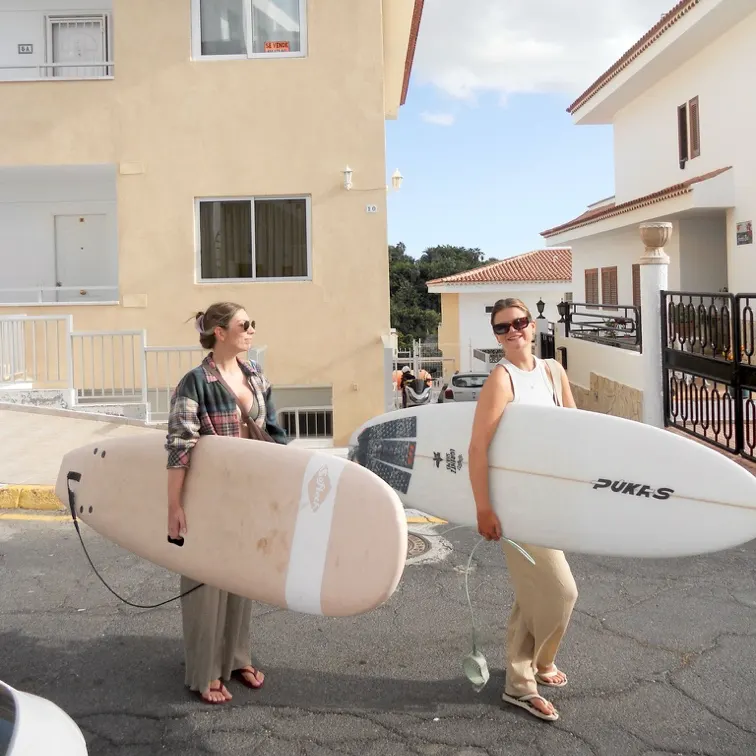
Let's bust a myth - surfing isn't a sport reserved for athletes. Anyone can give it a go, and the fitness comes with time. It's also a great way to find out which muscles are worth training and strengthening. On top of that, your body gets used to it with every session, and your fitness builds naturally.
2. Wetsuit first, board second
A good wetsuit is the foundation if you don't want to get out of the water after 15 minutes because you're frozen (especially in colder destinations, like our very own Baltic). If you're not sure what thickness and type to choose, ask at the local rental shop. A well-fitted wetsuit isn't a luxury - it's a must. It keeps you warm, adds buoyancy and protects you from rashes, all of which means more comfort in the water.

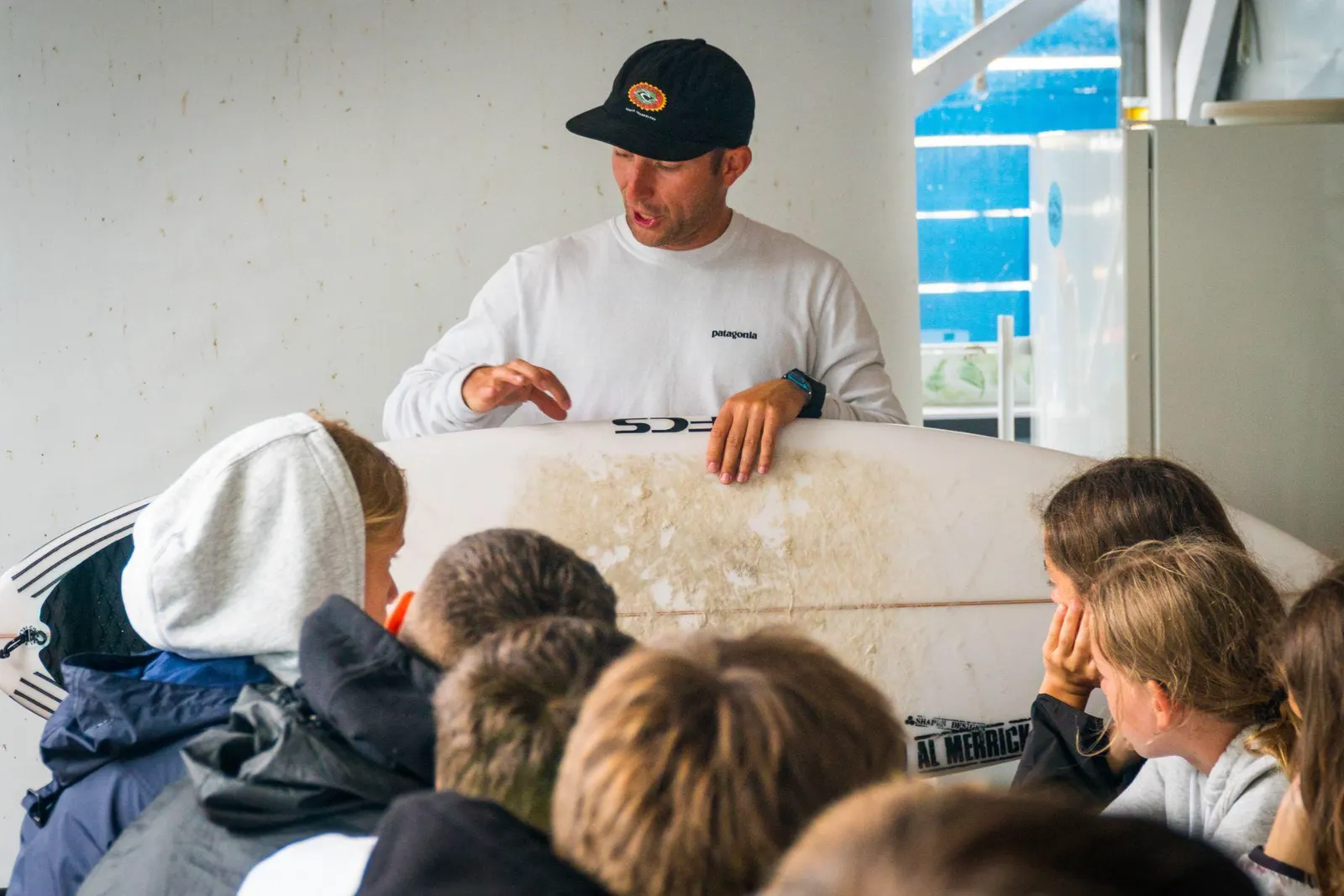
3. A lesson with a surf instructor is nothing to be ashamed of - it's a shortcut to success
Being a self-taught surfer is a proud title, but it can lead to a lot of frustration and cost you plenty of time. One lesson with a good instructor will teach you more than a week of trying on your own and will help you avoid repeating the same mistakes. You'll learn the safety basics and technique, and above all you'll get specific tips tailored to you. It's an investment that really pays off.
4. Not every wave is a good wave
Reading waves is one of the hardest skills there is - it takes experience and time in the water. At the start you go for anything you can, and it often ends in a wipeout. It's important to know that not every wave is good for learning. For your first time surfing, the ideal waves are gentle, "soft" and not too big. Avoid waves that break right on the shore or are too steep. Watch the more experienced surfers - where they paddle out and which waves they choose. The best way to get to know a spot is to talk to a local, who can warn you about hazards and give you some valuable advice.
5. Lying on the board is an art
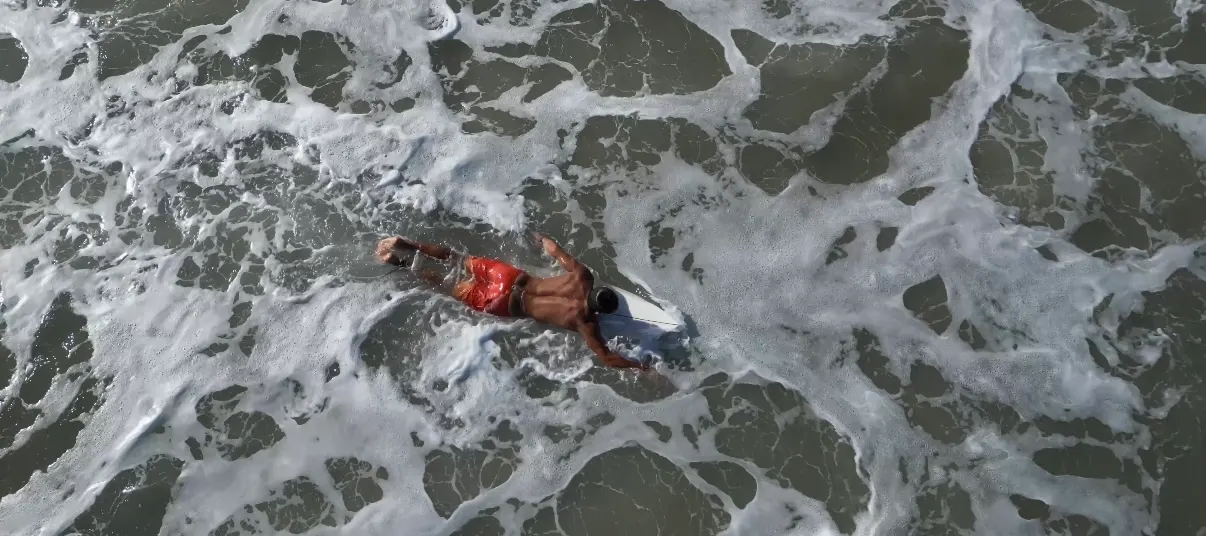
Sounds simple, but... not quite. You should lie in the centre, head slightly raised, without "hanging" off the tail. A bad position usually means less effective paddling, so you get tired faster. Lying in the wrong spot on the board also means waves just roll past under you. It's normal for your back and neck to ache during your first sessions - your muscles need time to adjust, because lying on a board isn't a natural position for us.
6. The not-so-simple theory of the pop-up (standing up on a wave)
Lots of beginners try to push up like they're doing a press-up and then "stand up". That's not the way. A proper pop-up is a dynamic move where you pull your knees up under your chest and quickly get into a standing position. It might seem like you need strong arms for this, but it's your legs and core that play first fiddle here. It's worth practising this move on dry land, for example at home on a mat. It helps build muscle memory.
7. First time surfing? You'll paddle more than you ride
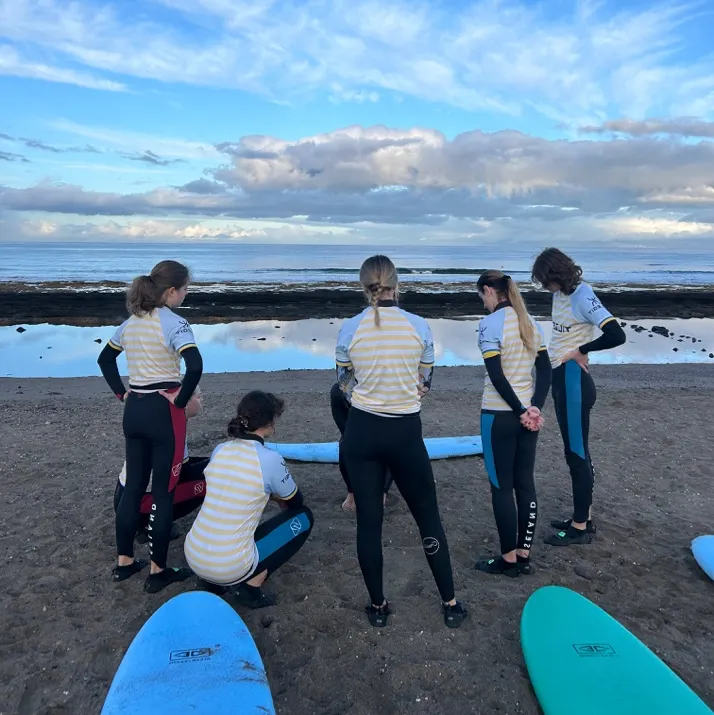
A surfer isn't just someone "standing on a wave". During a session you'll spend most of your time paddling, getting into position and making your way back to the take-off zone. It's tiring, but you have to accept that this makes up most of your time in the water. With time the ratio changes and your time on the wave gradually grows. My advice to start with: try to enjoy every moment in the water - both on the wave and right next to it.
8. Waves have a rhythm - learn to listen to it
The ocean isn't chaos - even if it sometimes looks that way. Waves often come in sets (say, 4-6 waves every few minutes), followed by a lull. If you paddle out at the wrong moment, you may struggle to get to the line-up and you'll tire yourself out faster. First time surfing? Watch the water for a few minutes before you paddle out - you'll find the best moment and be able to judge whether the waves match your level.
9. Sometimes it's better to let a wave go than to force it
Lots of beginners throw themselves at every single wave. The result? Chaos, dangerous situations, exhaustion and frustration. Sometimes the best thing you can do is... let it go. Wait for a gentler wave or a better moment, give yourself a second for a deep breath. Surfing teaches patience and humility.
10. It's not just a sport - it's a state of mind
The most important one. Surfing isn't only about technique, waves and gear. It's a way of being in the here and now. It's learning humility, connecting with nature, visiting new places and meeting people who are just as hooked as you are. Over time you'll catch yourself not just "catching waves", but soaking up the whole lifestyle that comes with surfing. Fair warning - it's addictive. Seriously.
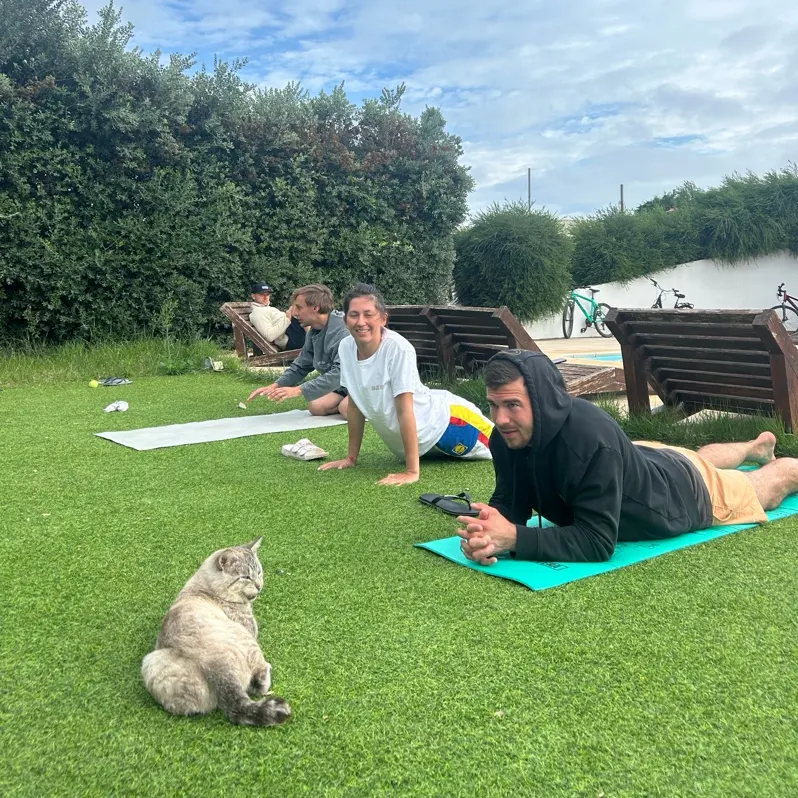
Every one of us started from zero - with a wetsuit not quite zipped up, a board not quite under control and a heart hammering away. Don't be afraid to make mistakes, and don't let the wipeouts put you off. Over time it all starts to come together, and the joy of riding your first wave will make up for all the rough moments.
See you in the water - and good luck on your surf adventure!
PS. If you're thinking about your first trip, check out our surf camps for beginners. SEE SURF TRIPS WITH LASTOUT
Written by: Emi, LASTOUT Team