Surfing often looks like a sport built purely on going with the flow and intuition. In reality, real progress takes more than that. Conscious surfing is the ability to understand your own body, your decisions and the conditions in the water. That awareness is what lets you develop your technique, improve your surf training and get more joy out of every session.

Surfing draws people in with its energy, freedom and emotion. But far too often it's treated as something that 'just comes' - get in the water and the rest will happen. Yet anyone who really wants to improve sooner or later discovers that without awareness there's no real progress.
A conscious surfer isn't the one who's been surfing the longest, but the one who understands what they're doing. They watch their body, analyse their decisions, understand their environment and learn from every mistake.
Because more awareness means more joy in surfing. More awareness means more stoke. And with more stoke comes motivation, consistency and real change.

1. Awareness of your body and movement while surfing
In surfing, every movement matters. Your hand position when paddling, where you look, the rotation of your hips on the pop-up, the rotation of your shoulders in a turn - all of it decides how efficient and smooth your surfing is. A conscious surfer doesn't just perform movements - they understand why they do them and how they affect their position on the board and their interaction with the wave.
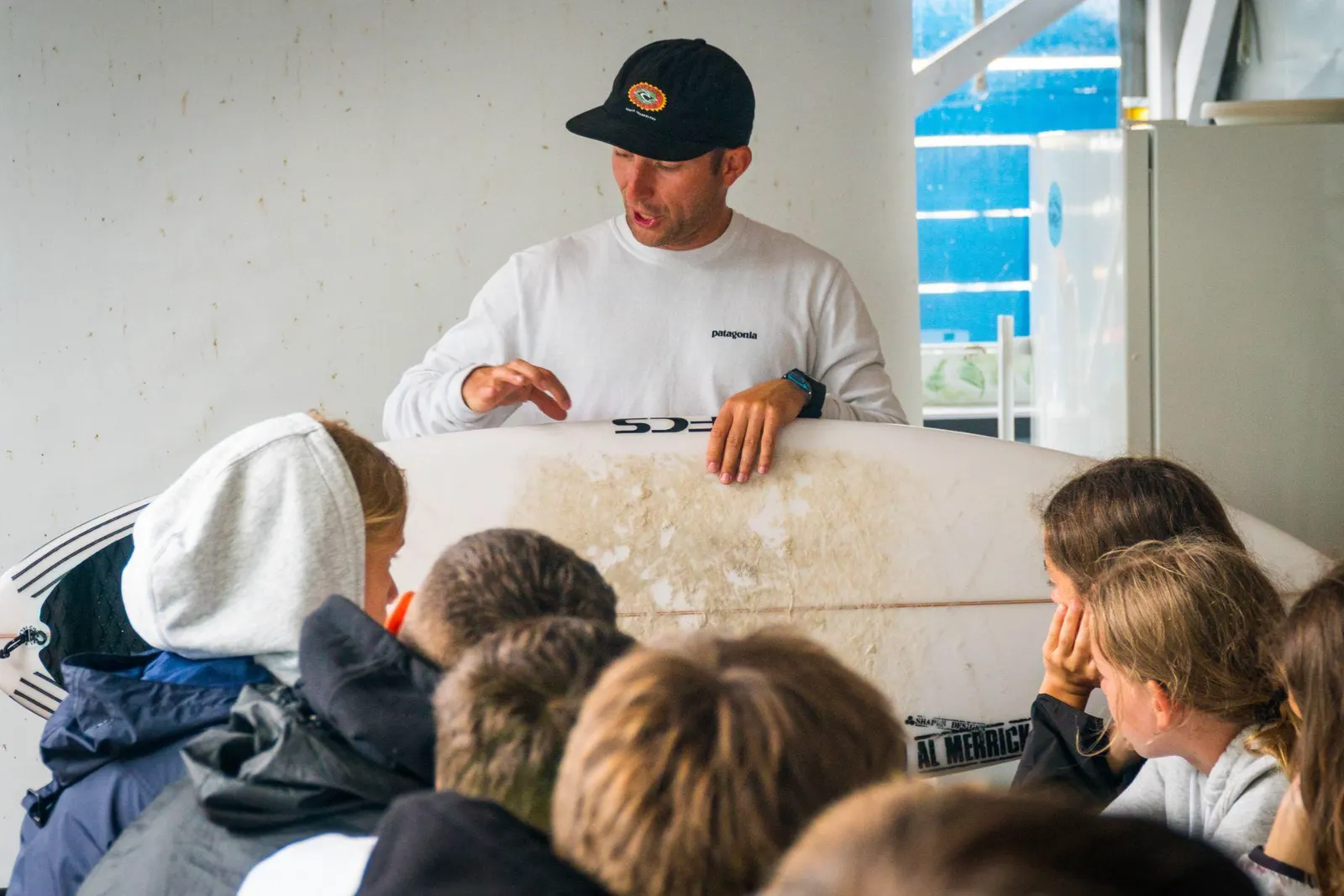
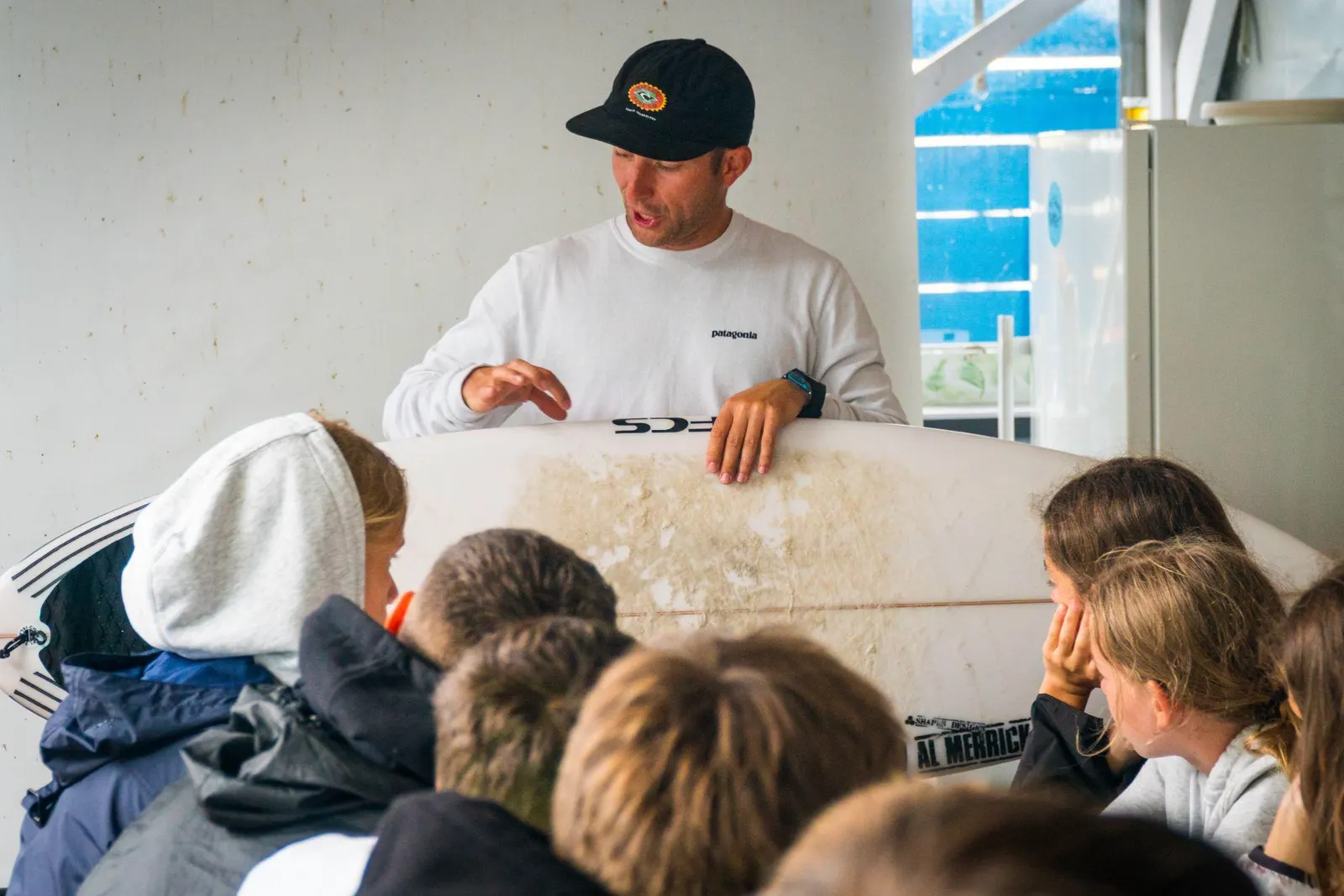
An experienced coach or instructor plays a key role in developing that awareness. An outside eye and professional correction make it possible to spot mistakes quickly that are hard to notice on your own - especially in dynamic conditions in the water.
Video analysis is used more and more in coaching - it's one of the most effective tools for building movement awareness. Filming your sessions lets you see yourself 'from the outside', identify your movement habits and assess your technique. It works especially well combined with a coach's commentary.
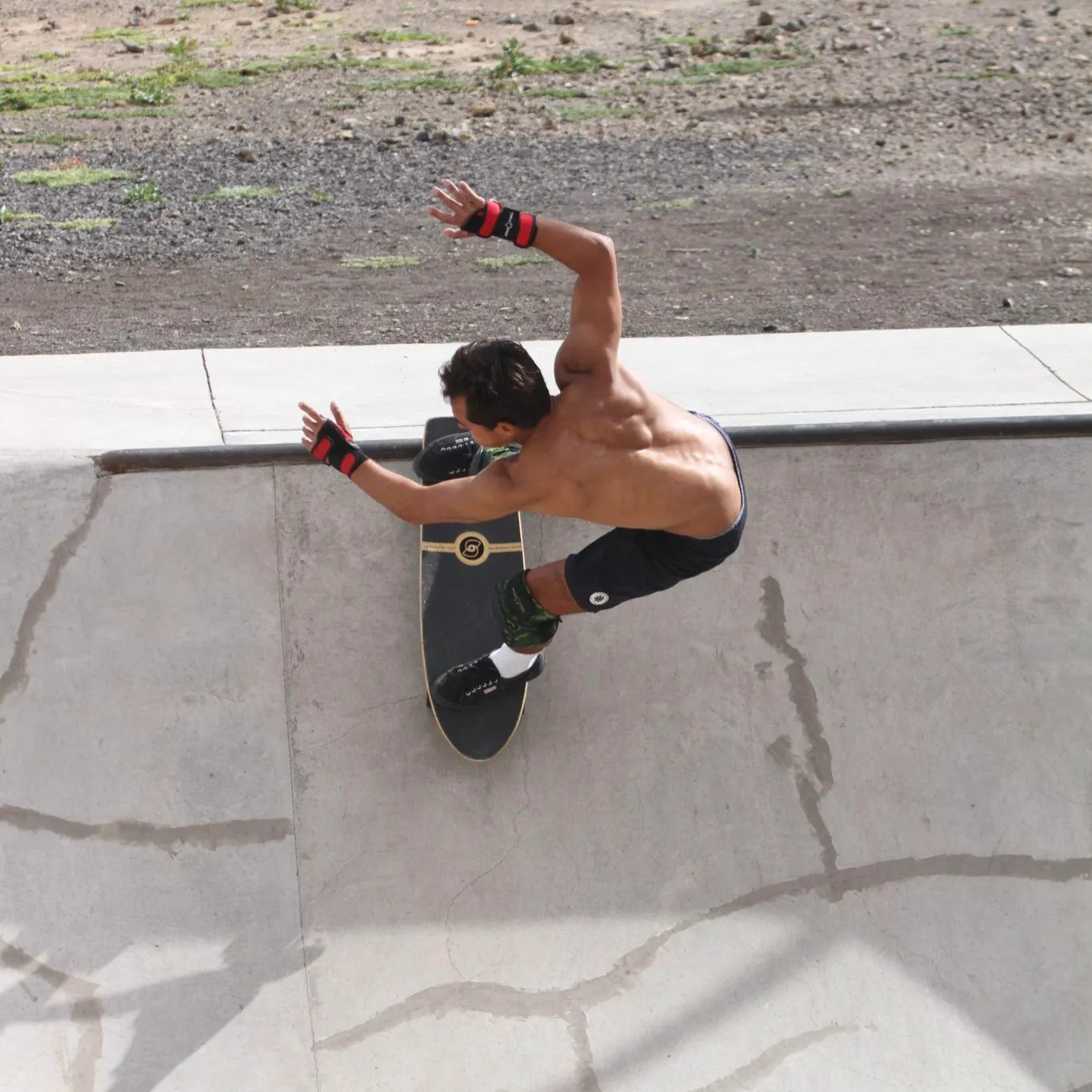
Modern surf coaching also puts a lot of emphasis on land training. 'Train on land, perform on water' programmes are becoming more and more popular, mixing surfskating, functional exercises and mobility work. Working out of the water prepares your body for specific technical tasks, increases your range of motion and improves motor control - which translates into better performance on the wave.
Takeaway: Before you fix your technique, learn to see it.

2. Awareness of your decisions in the water
Why did I pick that wave?
That's one of the most important questions a surfer can ask after every session. Wave selection should never be random - a conscious surfer reads the wave in terms of direction, size, how fast it's breaking and where to take off. The key is developing a connection with the wave and your timing - the ability to read its character early and sync up with its movement. Making conscious decisions in the water takes attention, focus and experience, but it isn't reserved for advanced surfers only.
One of the most effective ways to build this skill is to monitor your sessions methodically on video. Regularly filming and reviewing the footage lets you notice patterns that are hard to catch in the moment: where you take off, how you react to different types of waves, delays in your decisions or moments of hesitation.
Professional video analysis with an experienced coach doesn't just help you identify your mistakes, but also understand what causes them. Surfing is a complex sport, and decisions made in a split second often come from ingrained habits or a lack of knowledge about the conditions at the spot. Monitoring your sessions consciously lets you pause that process, understand it and change it.
Takeaway: Video doesn't lie - if you want to surf better, start with how you make decisions.
3. Awareness of the process - surfing as training

A conscious surfer doesn't treat each session as a random collection of waves and emotions. They understand that surfing is a training process in which progress takes time, structure and commitment. Instead of chasing instant results, they focus on developing specific skills, breaking them down into stages - from basic paddling, through wave selection and timing, all the way to advanced manoeuvres.
This approach is about setting training goals - both micro (for a given session) and macro (for your whole development). A session goal can be simple: today I'm working on my paddle out, my pop-up, wave selection, timing or my first turns. What matters is that you know what you're training and why.
A conscious training process also means accepting plateaus and setbacks. Not every surf session brings visible progress - but every one has value if you go into it with a clear goal and full attention.
Takeaway: Progress in surfing isn't linear - but it's absolutely possible if you approach it as a process.
4. Awareness of your environment and etiquette in the water

Surfing isn't just a relationship with the wave, but also with the place and the people who share it. A conscious surfer understands that the line-up is a shared space with its own rules, unwritten codes and respect for everyone else in the ocean.
The basis is knowing the rules of priority: closest to the peak has priority, a drop-in is a serious offence, and simple communication is enough to avoid misunderstandings.
A conscious surfer doesn't treat a spot like their private playground. They learn from others, respect the locals, don't stir up conflict and look after the vibe in the water.
Environmental awareness matters just as much. The ocean isn't just a stage for riding waves - it's a living environment that deserves respect and protection.
Takeaway: Awareness in surfing doesn't end on your board. It starts with relationships - with people, with places and with the ocean itself.
5. A surfer's mental awareness

Surfing tests not just your body, but your mind. It's a sport of intense emotions: excitement, frustration, fear, adrenaline, satisfaction - and helplessness too. A conscious surfer doesn't ignore those emotions - they can recognise them, name them and work with them.
That means, among other things:
watching how you react to stress,
managing your breathing and focus,
being able to get back into balance after a bad wave,
accepting mistakes and failures as a natural stage of development.
Mental work is an integral part of training. Tools like visualisation, pre-session routines and techniques for handling pressure are becoming part of surfers' everyday practice.
Takeaway: Your head decides how you surf - not just your body.
Awareness isn't a trend - it's the foundation of surfing
Being a conscious surfer is a daily practice - built on analysis, habits and the decisions you make in the water and out of it. It's the ability to see yourself in the process. And the willingness to steer that process with your head, not just your emotions.
A conscious surfer:
understands their body and the way it moves,
makes decisions based on analysis, not chance,
trains with a goal, stages and structure,
knows their place in the line-up and in the environment,
can manage their emotions in conditions that are changing and often unpredictable.
It's not about being perfect. It's about knowing what you're doing, why you're doing it and how you can do it better. Because once you start understanding yourself and your surroundings, surfing stops being chaos and becomes a conscious practice.

Written by Don, LASTOUT Team